Mobile App vs. Web App: When It Actually Matters
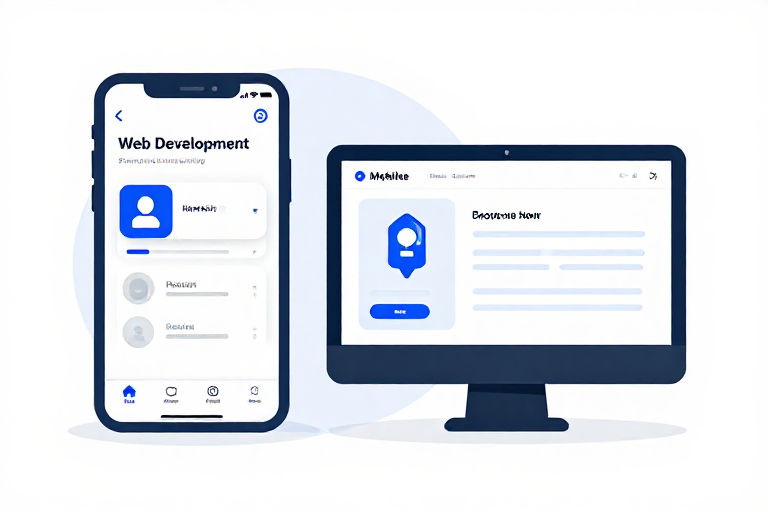
Most early-stage product ideas don't need a native mobile app. The question is worth thinking through, but the answer for most business tools and service products is: start with web, add mobile later if usage patterns demand it.
What "Native App" Actually Costs
A native mobile app means maintaining two separate codebases — one for iOS, one for Android — or investing in a cross-platform framework (React Native, Flutter) that adds its own complexity. App store approval adds delay. Updates go through review. Discovery through app stores is its own problem separate from web SEO.
For a validated product with a clear mobile use case, that investment makes sense. For an unvalidated idea in early stages, it's a significant overhead on top of building the core product.
When Mobile-First Is Actually Right
There are genuine cases where native mobile is the right starting point:
- The core experience requires device hardware — camera, GPS, push notifications, offline operation. If the product only works with those, web won't cut it.
- The target users are primarily on mobile and the product is consumed, not managed — content apps, utility apps, anything used casually and frequently on a phone rather than at a desk.
- Distribution through app stores is part of the strategy — some markets have app store discovery that's worth the tradeoff.
The Web App Case
A well-built web app that's mobile-responsive works on every device, doesn't require app store approval, deploys instantly, and is indexable by search engines. For tools used by small business owners — scheduling, quoting, client communication — users are often on desktop anyway, and the mobile experience through a responsive web app is sufficient.
Progressive Web Apps (PWAs) close the remaining gap: a web app can be added to a home screen, work offline with service workers, and receive push notifications on supported platforms. Not identical to a native app, but adequate for many use cases without the maintenance overhead.
The Real Question: What Does Usage Look Like?
The platform decision should follow from how the product is actually used, not from assumptions about what feels more "real" or impressive. Ask:
- When and where do users interact with this? Desk, commute, job site?
- Does it need device hardware? GPS, camera, sensors?
- How often? Daily habit or occasional tool?
- What's the discovery path? Search, referral, app store?
Those answers determine the right platform more reliably than any framework comparison. A field technician logging job site data needs mobile. An office manager reviewing weekly reports doesn't.
The Prototype Approach
For most ideas I prototype, we start with a responsive web app. It's faster to build, faster to iterate, and gets to real user feedback sooner. If early users consistently say "I want this on my phone as an app," that's data. If nobody mentions it, it probably wasn't the constraint.
Trying to figure out the right platform for an idea?
I can help think through the use case and what platform decision makes sense for your specific product — before you commit to a build.