Getting More Google Reviews Without Begging (or Breaking the Rules)
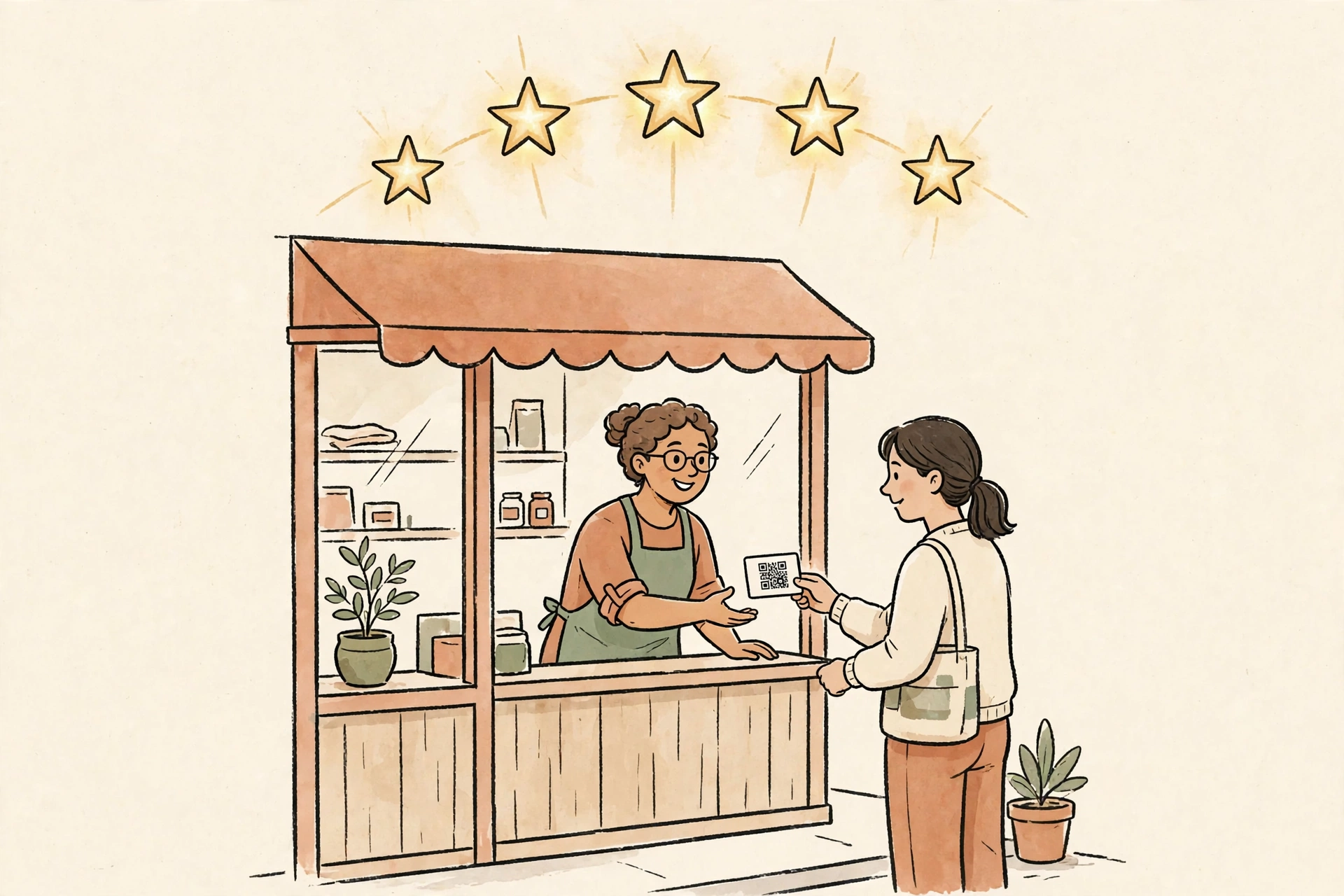
Seventy-eight percent of consumers were asked to leave a review in the last year. Eighty-three percent of the people who were asked went on to leave one. Twenty-eight percent say they always write one when asked, up from 16 percent a year ago. The ask works. Most customers are waiting for the prompt.
That matters because the bar keeps rising. Forty-seven percent of consumers will not use a business with fewer than 20 reviews. Thirty-one percent require 4.5 stars or better, nearly double the 17 percent who said so last year. And 74 percent only care about reviews written in the last three months. A business with 200 reviews from 2022 loses to one with 40 from this quarter. Recency is the lever nobody pulls.
What Google allows, what it bans, and what is illegal
Allowed: asking every customer, with no pre-screening. A direct review link, a QR code on the receipt, a follow-up text or email, a sign at the counter, a tap device the customer uses on their own. Banned: anything that buys the review, meaning payment, discounts, or freebies for posting, revising, or removing one. Also banned: review gating, which is screening customers and sending only the happy ones to Google; scripting the content, like asking for five stars or staff names; and fake reviews from staff or family accounts.
Then there is the line past Google's policy. The FTC's 2024 Consumer Reviews rule made buying and selling fake reviews illegal. Google blocked 240 million fake or policy-breaking reviews in 2024. Eleven percent of consumers say they were offered an incentive specifically for a positive review. That offer is not a marketing tactic. It is the seller describing a federal violation in an email.
The bad ones are the point
Eighty percent of consumers are more likely to use a business that responds to every review. Forty-two percent are unlikely to use one that ignores reviews entirely. And half are put off by generic, templated responses. A bad review with a specific, human response underneath it does more for you than five unanswered five-stars. Ninety-seven percent of consumers read reviews. Write the response for them.
Responding only to the positives scores badly. Responding only to the negatives scores badly. The move is all of them, every time, in your own words. Nineteen percent of consumers now expect a same-day response, up from 6 percent last year. Set aside ten minutes and a keyboard. That is the whole system.
When and how to ask
Ask once, at the moment of highest satisfaction: the job done, the meal finished, the keys handed over. Hand them the link or point at the QR code, say it in one sentence, and leave the room. Nobody writes an honest review with the owner watching. A card with the QR code on the counter keeps asking after you have walked away.
Then make it a habit. A burst of fifty every spring, then silence, looks like a campaign. A steady two or three a week looks like a business people keep choosing, and recency is doing the ranking work either way.